How Close Can an Oil Tank Be to a House in New Jersey?
An oil tank does not necessarily have to be located a specific number of feet away from a house in New Jersey. Depending on the type of heating oil tank and installation, an aboveground residential oil tank may be installed inside a home, in a basement, garage or other approved location, or outside near the house when applicable installation, fire, building and manufacturer requirements are met. Underground tanks have different placement and installation considerations.
For homeowners asking how far away from a house should an oil tank be, the correct distance depends on more than the space between the tank and the building. Tank type and capacity, nearby ignition sources and openings, property conditions, manufacturer instructions, local code requirements and whether the tank is aboveground or underground can all affect an acceptable location.
This means there is no single oil tank distance from a house that applies to every New Jersey property. Before installing or relocating a tank, the proposed location should be evaluated for compliance with applicable requirements and any permits or inspections required by the local municipality.
This guide explains oil tank placement requirements in New Jersey, where aboveground and underground tanks may be located, what can affect required clearances and what homeowners should consider before installing, replacing or relocating a residential heating oil tank.
What Determines Where an Oil Tank Can Be Located?
The appropriate location for a residential heating oil tank depends first on whether the tank will be installed aboveground or underground. Each type of installation has different structural, environmental and safety considerations.
For an aboveground tank, the location may be affected by the tank’s capacity, its proximity to building openings or potential ignition sources, the supporting surface, protection against physical damage and manufacturer installation requirements.
An underground tank requires additional consideration of excavation, underground utilities, property access and environmental conditions. Because a leaking underground tank can affect surrounding soil and groundwater, proper installation and future accessibility are particularly important.
For New Jersey homeowners researching oil tank location requirements in NJ, both state requirements and locally enforced construction or fire codes may apply. The appropriate location should therefore be determined for the individual property rather than by relying on a general setback number found online.
Can an Oil Tank Be Located Next to a House?
Yes, an oil tank may potentially be installed near a house when the particular installation is permitted and all applicable clearance, safety and installation requirements are satisfied.
This is especially important for homeowners researching how close can an oil tank be to a house. Simply measuring from the exterior wall does not establish whether a proposed location is acceptable. Doors, windows, vents, utilities, equipment, ignition sources and other site conditions can affect placement.
An experienced oil tank professional can evaluate the proposed location and determine what requirements apply before installation begins.
Where Can an Aboveground Oil Tank Be Installed?
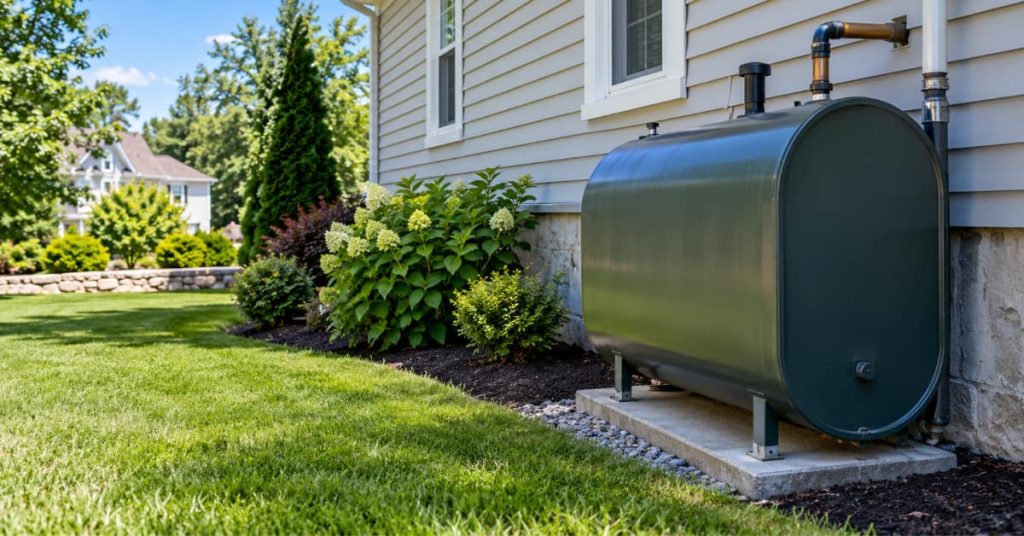
An above ground oil tank may be installed indoors or outdoors depending on the tank, property and applicable requirements. Common residential locations can include basements, garages and approved exterior locations.
The installation must provide appropriate support and protection while meeting applicable clearance and safety requirements. Outdoor tanks may also require consideration of weather exposure, vehicle impact, accessibility for heating-oil delivery and the condition of the surrounding property.
When evaluating above ground oil tank requirements in NJ, homeowners should also consider whether an existing tank location remains appropriate when the tank is replaced. A replacement tank does not necessarily need to be installed in exactly the same location as the old one.
What About Underground Oil Tank Placement in New Jersey?
Underground oil tank requirements NJ involve different considerations because the tank is buried and a leak may remain undetected while petroleum spreads into surrounding soil.
Before installing, replacing or addressing an underground tank, the property may need to be evaluated for utilities, accessibility, structures and environmental conditions. If an existing underground tank is being removed, soil testing around the underground oil tank may also be appropriate to determine whether a release has occurred.
If contamination is discovered, additional soil and groundwater investigation or remediation may be required.
How Far Should an Oil Tank Be From a Property Line?
There is not one universal answer to how far should an oil tank be from a property line that should be applied to every residential property. Required setbacks and clearances can depend on the tank and installation as well as applicable state and locally enforced requirements.
This is particularly important on smaller New Jersey lots where a proposed outdoor tank may be close to a neighboring property, driveway, building opening or other structure.
Before selecting a location, homeowners should have the complete site evaluated rather than assuming that sufficient space from the house automatically makes the location acceptable.
Can a Heating Oil Tank Be Installed in a Basement?
Heating oil tanks are commonly found in New Jersey basements, but an indoor installation must still meet applicable requirements.
The tank’s condition, capacity, support, accessibility, fill and vent piping and proximity to other equipment can all matter. There must also be a practical way to install or replace the tank safely.
For older homes, basement access can become an important issue during replacement. A tank that was installed decades ago may be difficult to remove through existing doors, stairs or other openings.
Do You Need a Permit to Install or Replace an Oil Tank in New Jersey?
Permit and inspection requirements can depend on the type of project and the municipality where the property is located. Homeowners should verify applicable requirements before installing, removing, replacing or relocating an oil tank.
New Jersey environmental requirements become especially important when an oil tank has leaked, or contamination is suspected. Homeowners can find information about environmental regulations and contaminated sites through the New Jersey Department of Environmental Protection (NJDEP).
This is one reason professional evaluation is important when determining where an oil tank should be located. Proper planning can address installation requirements while reducing the risk of environmental and property problems later.
Why Oil Tank Location Matters
Proper residential oil tank placement is about more than meeting clearance requirements. The location can affect tank protection, accessibility, fuel delivery, inspection, maintenance and the ability to identify potential leaks.
A poorly positioned or deteriorating tank can create much larger problems if heating oil reaches the surrounding soil or groundwater. For underground tanks in particular, contamination may not be obvious until testing is performed or the property is being sold.
Oil Tank Services Throughout New Jersey
All American Environmental provides oil tank and environmental services for homeowners and property owners throughout New Jersey, including Hudson, Mercer, Middlesex, Monmouth, Hunterdon, Ocean, Morris, Bergen, Passaic, Somerset, Union, Essex, Sussex and Warren Counties.
Services can include oil tank removal and replacement-related work, tank investigation, soil testing and environmental remediation when contamination is discovered.
Frequently Asked Questions About Oil Tank Placement
How far away from a house should an oil tank be?
There is no single distance that applies to every residential oil tank in New Jersey. Aboveground tanks may be installed in approved indoor or outdoor locations, while the required placement depends on the tank, property, applicable codes and manufacturer requirements.
Can an oil tank be right next to my house?
Potentially, depending on the installation. An outdoor oil tank may be located near a home when applicable clearance, installation and safety requirements are satisfied.
Can an oil tank be installed inside a house?
Yes. Residential heating oil tanks may be installed in approved indoor locations, including some basements and garages, when the installation meets applicable requirements.
Are oil tank rules the same throughout New Jersey?
State requirements apply throughout New Jersey, but permits, inspections and locally enforced code requirements can affect individual projects. The property and proposed installation should be evaluated before work begins.
Should I move my oil tank when replacing it?
Not necessarily. However, replacement provides an opportunity to determine whether the existing location remains appropriate or whether another location would provide better access, protection or compliance.
Need Help With an Oil Tank in New Jersey?
If you’re wondering how far away from a house should an oil tank be, whether an existing tank is properly located or what is involved in removing or replacing a tank, All American Environmental can help evaluate your property and determine the appropriate next steps.
From aboveground and underground oil tanks to suspected leaks, soil testing and environmental remediation, All American Environmental provides professional oil tank and environmental services throughout its New Jersey service area.
Contact All American Environmental to discuss your oil tank project in New Jersey.