Understanding NJ Oil Tank Removal Laws In 2026
For many New Jersey homeowners and commercial property owners, an aging heating oil tank can become one of the most significant environmental concerns associated with owning real estate. Whether you are preparing to sell your home, purchasing a property, renovating an older building, or replacing an outdated heating system, understanding NJ oil tank removal laws 2026 can help you avoid costly surprises and protect both your investment and the environment.
While New Jersey does not require every underground heating oil tank to be removed simply because of its age, state regulations and lender requirements often make removal the most practical long-term solution. Underground storage tanks that remain in place for decades may corrode, leak petroleum products into surrounding soils, and potentially affect groundwater. Even tanks that have never experienced a noticeable leak can become environmental liabilities if deterioration occurs over time.
For buyers and sellers alike, environmental due diligence has become increasingly important. Many lenders, insurance companies, attorneys, and home inspectors recommend locating and evaluating any existing or abandoned oil tanks before a real estate transaction moves forward. Discovering an undocumented underground tank late in the buying or selling process can delay closing, increase costs, and require additional environmental investigation.
Understanding today’s regulations, environmental responsibilities, and recommended best practices allows property owners to make informed decisions while minimizing future liability.
Why Oil Tank Regulations Continue To Matter In New Jersey
New Jersey has one of the country’s oldest housing inventories. Thousands of homes constructed before natural gas became widely available relied on underground heating oil tanks for residential heating. Although many properties have since converted to natural gas or other energy sources, countless underground tanks remain buried beneath yards, driveways, garages, or landscaped areas.
Over time, steel tanks naturally deteriorate. Exposure to moisture, changing soil conditions, and decades underground can cause corrosion that weakens the tank walls. Once corrosion creates an opening, heating oil may begin migrating into surrounding soil and, in some cases, groundwater.
Even relatively small petroleum releases can require environmental investigation, laboratory testing, soil excavation, and remediation depending on site conditions. Addressing contamination early often reduces both environmental impacts and overall cleanup costs.
Today’s NJ oil tank removal laws 2026 are designed to encourage responsible management of aging heating oil tanks while protecting public health, groundwater resources, and property values throughout the state.
What Changed For NJ Oil Tank Removal In 2026?
Many property owners ask whether New Jersey introduced entirely new oil tank removal laws in 2026. While there has not been a single sweeping legislative change requiring all residential underground heating oil tanks to be removed, environmental oversight continues to evolve through updated guidance, remediation standards, and regulatory expectations administered by the New Jersey Department of Environmental Protection (NJDEP).
Property owners should remain aware of several ongoing priorities that continue to shape environmental projects across the state:
- Greater emphasis on early environmental investigation when contamination is suspected.
- Updated technical guidance for site remediation and environmental reporting.
- Continued focus on protecting groundwater resources.
- Increased use of Licensed Site Remediation Professionals (LSRPs) to oversee regulated environmental cases.
- Enhanced documentation requirements for environmental investigations and cleanup activities.
- Ongoing updates to remediation standards as new environmental research becomes available.
These evolving guidelines reinforce the importance of hiring experienced environmental professionals who understand current NJDEP procedures, documentation requirements, and remediation protocols.
Rather than waiting until contamination becomes a larger problem, many homeowners choose proactive tank removal before selling their property or undertaking major renovations.
Are Underground Oil Tanks Illegal In New Jersey?
One of the most common misconceptions is that every underground residential heating oil tank is automatically illegal.
In reality, simply owning an underground residential heating oil tank does not necessarily violate New Jersey law. However, aging tanks present environmental risks that should not be ignored.
Several situations commonly lead property owners to remove underground tanks:
- Selling a home
- Purchasing an older property
- Switching to natural gas
- Insurance company recommendations
- Mortgage lender requirements
- Visible signs of deterioration
- Suspected petroleum odors
- Renovation or new construction projects
Even if an existing tank has never leaked, removing it before problems develop often reduces long-term environmental liability and provides greater peace of mind.
Aboveground Vs. Underground Heating Oil Tanks
Understanding the difference between aboveground and underground heating oil tanks helps property owners better evaluate potential environmental risks.
Aboveground Oil Tanks
Aboveground tanks remain visible and are generally easier to inspect for corrosion, leaks, damaged piping, or maintenance issues. Because the tank is accessible, deterioration can often be identified before significant environmental damage occurs.
Routine inspections and maintenance help extend the service life of aboveground tanks while reducing the likelihood of unexpected failures.
Underground Oil Tanks
Underground tanks present greater environmental concerns because corrosion occurs out of sight. A tank may remain buried for decades without visible signs of deterioration until contamination is discovered during construction, landscaping, or a property transaction.
Potential risks include:
- Corrosion of steel tank walls
- Petroleum releases into surrounding soil
- Groundwater contamination
- Vapor migration concerns
- Increased remediation costs
- Delays during real estate transactions
- Reduced property value
- Additional environmental investigations
Because these risks increase as tanks age, many environmental professionals recommend proactive removal rather than waiting for evidence of a leak.
Why Homebuyers Frequently Request Oil Tank Inspections
Residential real estate transactions throughout New Jersey frequently include environmental questions regarding former heating systems.
Homebuyers often want confirmation that no abandoned underground oil tanks remain on the property. Mortgage lenders and insurance companies may also request documentation verifying whether a tank exists or whether it has been properly removed.
If an underground tank is discovered unexpectedly during the transaction, additional environmental work may become necessary before closing can proceed.
Depending on the situation, this may include:
- Oil tank sweeps
- Environmental site inspections
- Soil sampling
- Laboratory analysis
- Tank removal
- Contaminated soil evaluation
- Groundwater investigation if warranted
Addressing these concerns early helps buyers and sellers avoid unnecessary delays while reducing uncertainty throughout the closing process.
What Happens During A Typical Oil Tank Removal Project?
Although every property is unique, most residential oil tank removal projects follow a structured process designed to protect the property while complying with applicable environmental requirements.
The project generally begins with confirming the tank’s location and evaluating site conditions. Contractors review access, utilities, landscaping, structures, and other factors that may affect excavation.
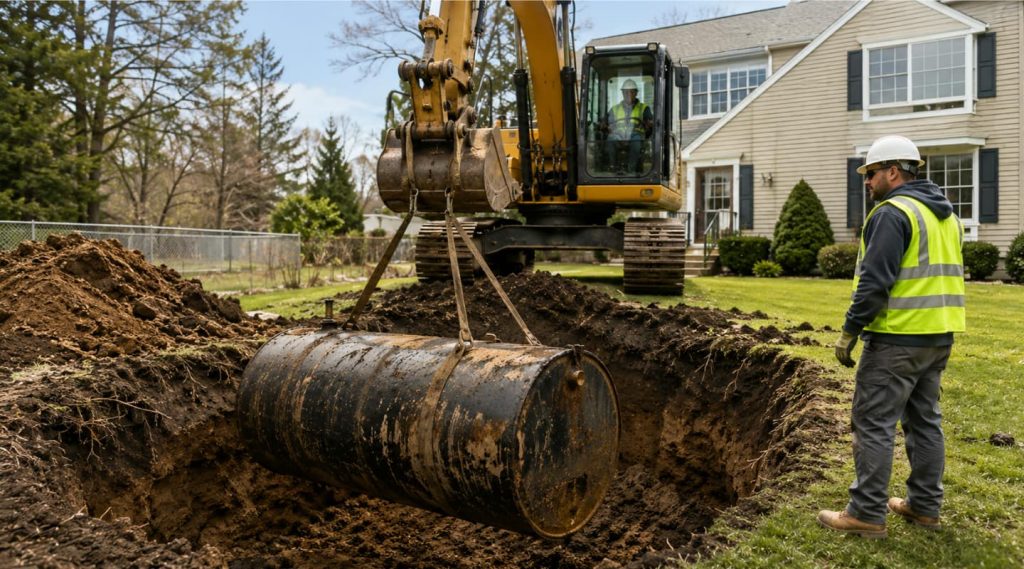
Once preparations are complete, excavation equipment carefully exposes the tank. Any remaining fuel is removed, disconnected piping is addressed, and the tank is safely extracted from the ground.
After removal, environmental professionals inspect the excavation area for signs of staining, petroleum odors, or other indicators that a release may have occurred.
If no evidence of contamination is observed, the excavation can often be backfilled after appropriate documentation is completed. If contamination is suspected, additional environmental investigation may be recommended to determine whether soil or groundwater has been affected.
Understanding these procedures allows property owners to better prepare for the project while recognizing why environmental expertise plays such an important role throughout the removal process.
When Should An Oil Tank Be Removed?
While some property owners wait until they experience a problem, many environmental professionals recommend removing an aging underground heating oil tank before it becomes a liability. Proactive removal can help reduce the risk of contamination, simplify future property transactions, and eliminate uncertainty about the condition of an older tank.
Several situations often make oil tank removal a practical decision.
You’re Preparing To Sell Your Property
One of the most common reasons homeowners schedule oil tank removal is before listing their home for sale. Buyers today are more aware of environmental risks than ever before, and many ask whether the property previously used heating oil.
If an underground tank is present, buyers may request additional inspections or environmental documentation before proceeding with the purchase. Some lenders and insurance companies may also require confirmation that the property does not present an environmental concern.
Completing removal before listing the property often helps:
- Improve buyer confidence
- Reduce closing delays
- Eliminate questions about hidden tanks
- Provide documentation for future owners
- Minimize unexpected negotiations during inspections
Addressing the issue proactively allows sellers to maintain greater control over the transaction rather than responding to last-minute environmental concerns.
Buying An Older Home In New Jersey
New Jersey has many homes built before natural gas became widely available, making former heating oil systems common throughout the state. Even if a property currently uses natural gas, propane, or electric heat, that does not necessarily mean an underground oil tank was removed years ago.
Older homes may have:
- Documented tank removals
- Properly abandoned tanks
- Undocumented underground tanks
- Previously removed tanks without complete records
Before purchasing an older property, many buyers choose to have an oil tank sweep performed to determine whether any underground tank remains on the property.
Identifying potential issues before closing allows buyers to make informed decisions and negotiate appropriate solutions if necessary.
Converting From Heating Oil To Natural Gas
Many New Jersey homeowners have converted from heating oil to natural gas over the past several decades. While the heating system changes, the underground tank is not always removed during the conversion.
In some cases, older tanks were simply disconnected and left underground. Unfortunately, abandoned tanks may continue deteriorating over time, creating future environmental concerns even though they are no longer in use.
Removing the tank after converting to natural gas helps eliminate one potential environmental liability from the property.
Renovating Or Expanding Your Property
Home additions, swimming pools, patios, garages, landscaping projects, and foundation work occasionally uncover previously unknown underground oil tanks.
Finding a buried tank after construction has already begun can significantly delay the project while environmental evaluations are completed.
If major excavation is already planned, many homeowners choose to remove an existing underground tank beforehand rather than risk interruptions once construction is underway.

The Importance Of Oil Tank Sweeps
One of the first questions environmental professionals ask is whether anyone knows if an underground tank exists.
Because many tanks were buried decades ago, property owners may have little or no documentation regarding previous heating systems.
An oil tank sweep is a non-invasive investigation designed to locate underground steel tanks before excavation begins.
Professional oil tank sweeps typically use specialized detection equipment capable of identifying buried metallic objects beneath lawns, driveways, garages, patios, and landscaped areas.
Tank sweeps are commonly recommended when:
- Buying an older home
- Selling residential property
- Completing environmental due diligence
- Planning excavation projects
- Investigating historical heating systems
- Reviewing inherited properties
Discovering a tank before construction or closing allows property owners to address the issue under controlled circumstances rather than during an unexpected emergency.
Permits And Regulatory Requirements
Although residential oil tank removal projects are generally straightforward when performed by experienced professionals, they often require compliance with local regulations and environmental requirements.
Permit requirements may vary depending on:
- Municipality
- Tank size
- Property type
- Excavation conditions
- Environmental findings
Experienced environmental contractors understand how these requirements apply to individual projects and help ensure work is completed according to applicable regulations.
Documentation generated during the project may also become valuable for future property sales or refinancing.Property owners can also review current underground storage tank guidance and remediation resources published by the New Jersey Department of Environmental Protection (NJDEP) to better understand environmental requirements and technical guidance for oil tank investigations.
What Contractors Look For During Tank Removal
Removing the tank is only one part of the overall project.
Environmental professionals also carefully evaluate conditions surrounding the excavation to determine whether evidence suggests a petroleum release may have occurred.
During excavation, contractors commonly inspect for:
- Petroleum odors
- Dark or stained soils
- Visible corrosion
- Holes in the tank
- Damaged piping
- Fuel residue
- Wet or saturated soils
- Unusual soil discoloration
These observations help determine whether additional environmental investigation should be recommended.
Many tanks are removed without evidence of contamination. However, when signs of a release are identified, early evaluation allows the environmental response to begin promptly.
Why Documentation Matters
Documentation has become increasingly important under NJ oil tank removal laws 2026, particularly during real estate transactions.
Keeping complete records benefits both current and future property owners.
Typical documentation may include:
- Tank location information
- Removal records
- Disposal documentation
- Photographs
- Environmental observations
- Soil sampling results (if performed)
- Laboratory reports
- Regulatory documentation when applicable
Maintaining organized records can simplify future home sales by demonstrating that the underground tank was professionally addressed.
Understanding Environmental Investigations
Not every oil tank removal results in environmental contamination.
However, if petroleum staining, odors, or visible corrosion suggest a release may have occurred, additional investigation helps determine whether contamination extends beyond the immediate excavation.
The extent of any investigation depends entirely on site-specific conditions.
Environmental professionals may recommend:
- Visual excavation assessment
- Soil sampling
- Laboratory analysis
- Delineation sampling
- Groundwater evaluation if warranted
- Regulatory consultation when required
These investigations are designed to accurately define site conditions rather than assume contamination exists.
A science-based approach helps property owners avoid unnecessary work while ensuring environmental concerns are properly identified.
The Role Of Licensed Environmental Professionals
Environmental projects often involve more than excavation equipment alone.
Experienced environmental consultants understand the regulatory framework, sampling procedures, documentation requirements, and remediation protocols that may apply if contamination is discovered.
Working with qualified professionals helps ensure that investigations follow accepted environmental standards while providing accurate documentation for property owners, lenders, insurance companies, attorneys, and regulatory agencies when necessary.
From initial planning through project completion, environmental expertise helps minimize uncertainty and allows property owners to navigate the process with greater confidence.
What Happens If Contamination Is Found?
One of the biggest concerns property owners have is whether removing an underground oil tank will reveal contamination. While not every tank leaks, older steel tanks that have been underground for decades are more susceptible to corrosion, which can allow heating oil to escape into surrounding soil.
If evidence of a release is discovered during excavation, the next steps depend on the extent of the contamination. Every property is different, and environmental professionals evaluate each site individually rather than assuming extensive cleanup will be required.
In many cases, professional soil testing and environmental sampling help determine the extent of any petroleum release before cleanup recommendations are made.
Finding contamination does not necessarily mean the project becomes overwhelming. Many releases are identified early and addressed before they become larger environmental problems.
The goal is to accurately determine the condition of the property and develop an appropriate remediation plan based on scientific data.
How Soil Contamination Is Evaluated
If petroleum odors, stained soil, or visible corrosion indicate a possible release, environmental professionals typically begin by evaluating the surrounding soils.
Visual observations alone cannot determine the extent of contamination. Soil sampling provides valuable information about whether petroleum compounds are present and, if so, whether additional investigation or remediation may be necessary.
The evaluation process may include:
- Collecting representative soil samples
- Laboratory analysis of soil conditions
- Determining the horizontal extent of affected soil
- Determining the vertical extent of affected soil
- Comparing analytical results with applicable environmental standards
- Developing recommendations based on site-specific findings
This information helps establish whether contamination is limited to a small excavation area or extends beyond the immediate tank location.
When Groundwater Testing May Be Necessary
Many property owners ask whether groundwater testing is required whenever an underground oil tank is removed. If groundwater has been affected, a groundwater investigation helps environmental professionals evaluate the extent of the release and develop an appropriate remediation strategy.
The answer depends on site conditions.
If the environmental investigation indicates contamination may have migrated beyond surrounding soils or reached groundwater, additional evaluation may be recommended. Factors such as soil type, groundwater depth, the size of the release, and laboratory results all influence this decision.
Groundwater investigations may involve:
- Installing temporary or permanent monitoring wells
- Collecting groundwater samples
- Laboratory analysis
- Evaluating groundwater movement
- Determining whether contamination has migrated beyond the original release area
These investigations provide important information that helps environmental professionals determine the most appropriate course of action while protecting surrounding properties and natural resources.
Understanding Soil Remediation
If contaminated soil is identified, remediation is often the next step.
The purpose of soil remediation is to remove or properly manage impacted materials so the property can move toward regulatory closure and future use without unnecessary environmental concerns.
Depending on site conditions, remediation strategies may include:
- Excavating impacted soil
- Proper transportation and disposal of contaminated materials
- Confirmatory soil sampling
- Additional delineation if needed
- Site restoration after cleanup
The scope of remediation varies significantly from one property to another. Some projects involve only limited soil removal, while others require additional investigation before final cleanup recommendations can be made.
Experienced environmental professionals tailor remediation activities to the specific conditions found on each property rather than applying the same approach to every project.
The Importance Of Groundwater Protection
Groundwater is one of New Jersey’s most valuable natural resources. Protecting it remains a major priority during environmental investigations involving petroleum releases.
Heating oil that migrates beyond surrounding soils has the potential to affect groundwater under certain conditions. Early detection helps reduce environmental impacts and allows appropriate corrective actions to begin sooner.
This emphasis on groundwater protection is one reason NJ oil tank removal laws 2026 continue to focus on proper environmental investigation, documentation, and remediation whenever contamination is identified.
Environmental Reporting Requirements
If contamination requiring regulatory oversight is identified, environmental professionals follow established reporting procedures in accordance with applicable New Jersey requirements.
Depending on the circumstances, documentation may include:
- Site investigation reports
- Laboratory analytical data
- Soil sampling summaries
- Groundwater investigation results
- Remediation plans
- Confirmation sampling
- Regulatory correspondence
Accurate documentation provides a complete record of environmental work performed and helps demonstrate compliance throughout the remediation process.
Keeping organized records is especially valuable during future property sales, refinancing, redevelopment, or commercial transactions.
How Long Does An Oil Tank Removal Project Take?
Every project differs depending on accessibility, weather conditions, property layout, and environmental findings.
A straightforward residential tank removal with no evidence of contamination may often be completed relatively quickly. However, if contamination is discovered, additional investigation, laboratory testing, permitting, or remediation may extend the overall timeline.
Factors influencing project duration include:
- Tank size
- Accessibility
- Excavation complexity
- Utility locations
- Weather
- Soil conditions
- Laboratory turnaround times
- Environmental investigation requirements
- Remediation needs
Working with an experienced environmental contractor helps coordinate each phase efficiently while ensuring regulatory requirements are properly addressed.
Common Factors That Influence Project Costs
Property owners often ask how much oil tank removal will cost.
Because every property presents unique conditions, there is no universal price.
Several variables influence project costs, including:
- Tank size
- Tank depth
- Accessibility
- Landscaping restoration
- Concrete or asphalt removal
- Utility conflicts
- Soil conditions
- Permit requirements
- Environmental investigation
- Laboratory testing
- Soil remediation, if necessary
Although contamination can increase project costs, delaying removal may allow environmental problems to worsen over time. Addressing aging tanks proactively often reduces uncertainty and helps property owners better manage potential expenses.
Choosing The Right Environmental Contractor
Oil tank removal involves far more than excavation. Environmental knowledge, regulatory experience, and technical expertise all play an important role in protecting the property and guiding the project from start to finish.
When evaluating contractors, property owners should look for companies that offer comprehensive environmental services rather than simply excavation.
An experienced environmental contractor should be able to assist with:
- Underground oil tank removal
- Oil tank sweeps
- Soil testing and environmental sampling
- Groundwater investigations
- Environmental site assessments
- Site remediation services
- Environmental consulting
Selecting a company with experience across the entire environmental process can simplify communication and help ensure every stage of the project is handled professionally.
Why Experience Matters
Environmental projects often involve multiple disciplines, including excavation, geology, environmental science, laboratory analysis, and regulatory compliance.
An experienced environmental consulting firm understands how these disciplines work together and can identify potential concerns before they become costly problems.
Property owners benefit from working with professionals who can:
- Evaluate environmental risks
- Interpret laboratory data
- Recommend appropriate investigation strategies
- Coordinate remediation activities
- Maintain thorough documentation
- Navigate evolving NJDEP guidance and remediation standards
This comprehensive approach provides greater confidence throughout the project while helping property owners make informed decisions based on accurate environmental information.
Protecting Your Property For The Future
Removing an aging underground oil tank is more than a maintenance project—it is an investment in the long-term value, safety, and marketability of your property.
Whether you plan to remain in your home for many years or are preparing to sell, eliminating an aging underground tank can reduce environmental uncertainty and help prevent future complications.
Combined with proper environmental investigation when needed, professional oil tank removal demonstrates responsible property ownership and supports compliance with current NJ oil tank removal laws 2026.
By taking action before problems develop, homeowners and commercial property owners can protect their investment, simplify future transactions, and contribute to the ongoing protection of New Jersey’s soil and groundwater resources.
Frequently Asked Questions About NJ Oil Tank Removal Laws 2026
Do all underground oil tanks in New Jersey have to be removed?
No. New Jersey does not require every residential underground heating oil tank to be removed solely because of its age. However, many property owners choose removal due to environmental concerns, real estate transactions, insurance requirements, or conversion to natural gas. An aging underground tank can become a future liability if corrosion leads to a petroleum release.
Should I have an oil tank sweep before buying an older home?
Yes. If a home was built when heating oil was commonly used, an oil tank sweep can help determine whether an underground tank is present. Identifying a hidden tank before closing provides buyers with important information and may prevent unexpected expenses after purchasing the property.
Can an underground oil tank affect the sale of my home?
It can. Buyers, lenders, insurance companies, and home inspectors often ask whether a property has an existing or previously removed underground oil tank. Having documentation showing the tank was professionally removed can help streamline the transaction and provide confidence to potential buyers.
What happens if contamination is found during oil tank removal?
If contamination is discovered, environmental professionals evaluate the extent of the release through soil sampling and, when necessary, groundwater investigation. The findings determine whether remediation is required and what steps should be taken to address the contamination in accordance with applicable environmental regulations.
How long does an oil tank removal project usually take?
The timeline depends on the tank’s location, accessibility, permitting requirements, and whether contamination is identified. A straightforward removal may be completed quickly, while projects involving environmental investigation or remediation generally require additional time.
Why should I hire an environmental company instead of a general excavation contractor?
Oil tank removal often involves environmental evaluation, documentation, soil sampling, and regulatory compliance. An experienced environmental contractor understands how to identify potential contamination, coordinate investigations, and manage the project from initial assessment through final documentation if environmental issues are encountered.
Protect Your Property With Professional Environmental Services
Whether you’re planning to sell your home, purchase an older property, replace an outdated heating system, or simply want peace of mind, understanding NJ oil tank removal laws 2026 is an important first step. Proactively addressing aging underground oil tanks can help reduce environmental risks, simplify future property transactions, and protect the long-term value of your investment.
At All American Environmental, our experienced team provides professional underground oil tank removal, environmental consulting, soil and groundwater investigations, site remediation, and regulatory support for residential and commercial properties throughout New Jersey. We are committed to helping property owners navigate every stage of the process with knowledgeable guidance, quality workmanship, and dependable service.
Contact All American Environmental today to schedule an oil tank evaluation or learn more about our comprehensive environmental services throughout New Jersey.