Buying, selling, financing, or redeveloping commercial property in New Jersey can involve more than reviewing the building, location, zoning, and purchase price. The property’s current and historical uses may also raise environmental concerns that could affect the transaction, future development plans, financing, and potential liability. Environmental Site Assessments in NJ help property buyers, owners, developers, lenders, attorneys, and other stakeholders evaluate these potential environmental risks before making important real estate decisions. Two terms that frequently arise during this process are Phase I Environmental Site Assessment and Phase II Environmental Site Assessment.
Although the names sound like consecutive steps in the same procedure, Phase I and Phase II assessments serve very different purposes. A Phase I ESA primarily investigates the property’s environmental history and current conditions to identify potential environmental concerns. A Phase II ESA generally moves into physical investigation and sampling when additional information is needed to determine whether contamination may actually be present.
Understanding the difference between Phase I and Phase II environmental site assessment services is especially important in New Jersey. The state’s long history of manufacturing, industrial operations, fuel storage, dry cleaning, automotive services, agriculture, commercial development, and changing land uses means that a property’s appearance today may reveal very little about activities that occurred there decades ago.
A modern retail property, office building, warehouse, multifamily development, or vacant parcel may have previously supported operations that created environmental concerns. That history is one reason environmental due diligence in New Jersey can be an important part of evaluating commercial and industrial real estate before a purchase, financing, redevelopment, or other transaction moves forward.
All American Environmental provides professional Environmental Site Assessments in NJ to help property owners, buyers, developers, and other stakeholders evaluate potential environmental concerns and determine whether additional investigation may be appropriate. Understanding what Phase I and Phase II assessments actually accomplish is the first step in determining which type of environmental investigation a property may require.
What Does a Phase I Environmental Site Assessment in NJ Include?
A Phase I Environmental Site Assessment is generally the starting point for evaluating potential environmental concerns associated with commercial or industrial real estate. Rather than immediately collecting soil or groundwater samples, the assessment uses historical research, regulatory information, property observations, interviews, and other reasonably ascertainable information to identify conditions that may warrant further evaluation. For buyers, sellers, lenders, developers, attorneys, and property owners, understanding what does a Phase I Environmental Site Assessment include can make the environmental due diligence process easier to navigate. A Phase I Environmental Site Assessment in NJ performed to the ASTM E1527-21 standard generally includes several major components.
Historical Property Research
A property’s current appearance does not necessarily reveal how it was used decades ago. Historical research is therefore an important part of Environmental Site Assessments in NJ, particularly for properties located in communities with a long history of industrial, manufacturing, and commercial development. Environmental professionals may review historical aerial photographs, topographic maps, city directories, fire insurance maps, property records, and other reasonably ascertainable sources to develop an understanding of previous uses.
Historical research may reveal that a property currently occupied by offices, retail businesses, apartments, warehouses, or other modern development once supported a very different use. Former manufacturing, automotive repair, dry cleaning, fuel storage, waste handling, and similar operations can be environmentally significant because of the materials historically used or stored at the site. Adjoining properties are also considered because environmental conditions do not necessarily stop at property boundaries, making surrounding land-use history another potentially important part of a commercial property environmental assessment.
Environmental Database and Regulatory Records Review
A Phase I ESA also includes a review of applicable federal, state, tribal, and local environmental records and databases within prescribed search distances. For Environmental Site Assessments in NJ, these records may contain information associated with underground storage tanks, spills, contaminated sites, hazardous materials, environmental permits, previous investigations, and remediation activities. Records associated with adjoining and nearby properties are also evaluated when relevant because a release originating elsewhere could potentially affect the subject property depending on the substances involved and site-specific conditions.
The New Jersey Department of Environmental Protection maintains environmental information and regulatory programs covering contaminated sites, site remediation, underground storage tanks, spills, and other environmental matters. Reviewing appropriate regulatory records can therefore provide valuable information during environmental due diligence in New Jersey, particularly when a property’s current use provides few clues about previous activities at the site or surrounding properties.
Site Reconnaissance
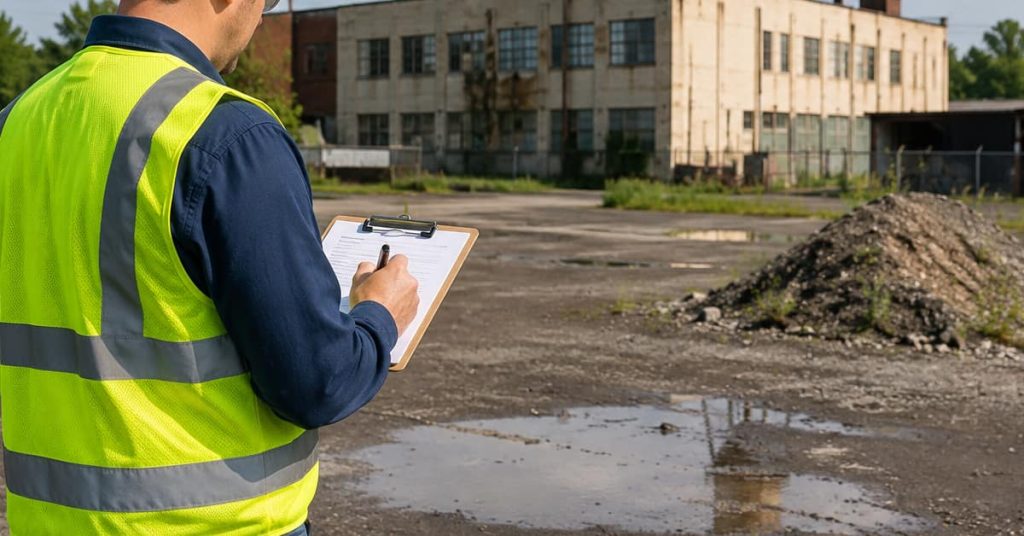
Historical records and regulatory databases tell only part of the story. The environmental professional also conducts a site reconnaissance to observe current property conditions and identify visible indications of potential environmental concerns. Depending on the property and its current or previous uses, observations may include:
- Storage tanks or evidence of former tanks
- Drums, chemical containers, or material storage areas
- Stained soil, pavement, or concrete
- Unusual odors or evidence of releases
- Waste storage or disposal areas
- Pits, ponds, drains, or fill areas
- Abandoned equipment or other potentially significant site conditions
The reconnaissance also considers the general characteristics and current use of the property as well as observable conditions on adjoining properties. This physical review is one reason an environmental assessment before buying commercial property in NJ can provide information that may not be apparent from purchase documents, photographs, or an ordinary building inspection.
Interviews and Property Information
Interviews with individuals who have knowledge of the property can provide information that may not appear in databases or historical records. Depending on the circumstances, this may include discussions with current or previous property owners, operators, occupants, property managers, or other knowledgeable individuals. Information provided by the person commissioning the Phase I ESA, referred to under the ASTM standard as the user, also contributes to the overall assessment.
These inquiries may help identify previous operations, environmental incidents, storage practices, underground tanks, waste-handling activities, or other historical conditions requiring consideration. When combined with historical research, regulatory records, and observations from the site reconnaissance, this information helps the environmental professional develop a more complete picture of the property’s environmental history.
Identification of Recognized Environmental Conditions
One of the most important outcomes of a Phase I Environmental Site Assessment in NJ is the environmental professional’s evaluation of recognized environmental conditions, commonly referred to as RECs. Under ASTM E1527-21, a recognized environmental condition relates to the presence or likely presence of hazardous substances or petroleum products at a property due to a release, likely release, or material threat of a future release under the circumstances addressed by the standard.
The assessment may also identify historical recognized environmental conditions or controlled recognized environmental conditions when applicable. These classifications have specific meanings under the ASTM standard and should not simply be interpreted as different levels of contamination. Identifying a REC also does not automatically mean that a property is contaminated or that a real estate transaction cannot proceed. Instead, it identifies an environmental condition that may require additional consideration or investigation.
Does a Phase I ESA Include Soil or Groundwater Testing?
Typically, a standard Phase I ESA does not include intrusive environmental sampling. Soil borings, monitoring wells, groundwater samples, soil samples, and laboratory analysis generally fall outside the standard Phase I scope. This is one of the most important distinctions in the difference between Phase I and Phase II environmental site assessment services: Phase I evaluates information and conditions that may indicate an environmental concern, while Phase II can use targeted sampling and laboratory analysis to investigate particular concerns when further evaluation is appropriate.
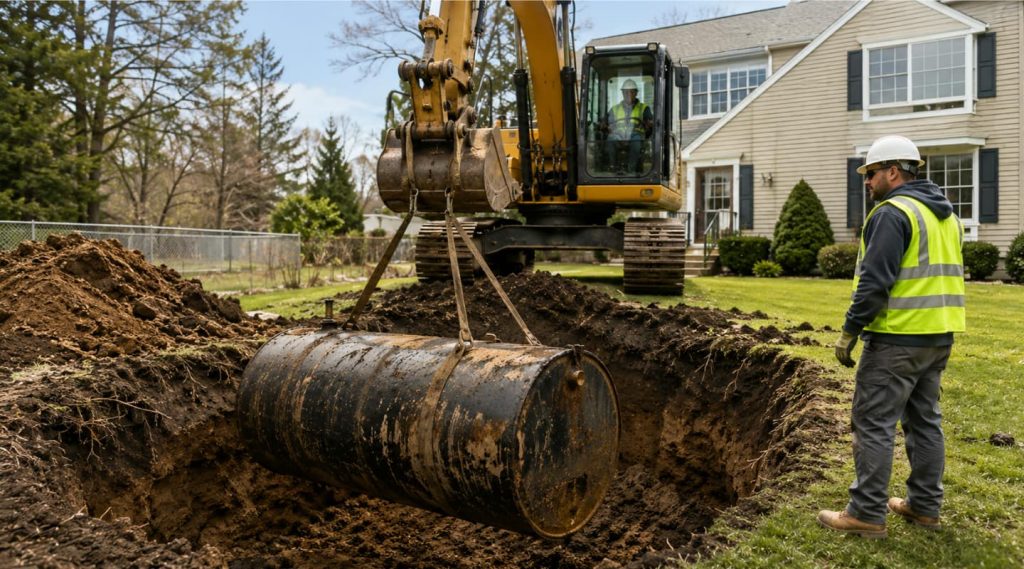
For example, historical research might reveal that part of a property was previously occupied by a gasoline station, while records or site observations indicate that underground storage tanks were formerly located there. The Phase I would evaluate that history and its environmental significance. If further investigation is warranted based on those findings, a Phase II Environmental Site Assessment in NJ may include targeted soil or groundwater sampling in areas associated with the former operations.
What Happens After the Phase I ESA?
Once the research, records review, interviews, site reconnaissance, and other required components are completed, the environmental professional prepares a report documenting the assessment and its findings. The report may indicate that no recognized environmental conditions were identified, or it may document one or more conditions requiring further consideration.
A Phase I ESA does not automatically lead to a Phase II. Whether additional investigation is appropriate depends on the findings, nature of the identified concerns, property history, objectives of the client, and other transaction-specific considerations. When additional investigation is recommended, the next step may be a Phase II Environmental Site Assessment in NJ designed around the particular environmental concerns identified at the property. All American Environmental provides Phase I Environmental Site Assessments and related environmental services for commercial and industrial properties throughout New Jersey.
What Is a Phase II Environmental Site Assessment in NJ?
A Phase II Environmental Site Assessment is a more focused investigation used when additional information is needed about a potential environmental concern at a property. Unlike a Phase I ESA, which relies primarily on records, historical research, interviews, and site observations, a Phase II Environmental Site Assessment in NJ can involve collecting physical samples and having them analyzed by a laboratory. The investigation is typically designed around specific concerns identified through a Phase I ESA, previous environmental reports, known property history, regulatory information, or other evidence.
This distinction is central to understanding Phase I vs Phase II Environmental Site Assessment services. Phase I is primarily used to identify potential environmental concerns through due diligence research and observations, while Phase II uses targeted investigation and testing to obtain additional information about particular conditions. The scope of Phase II therefore depends heavily on what is known or suspected about the individual property.
When Is a Phase II Environmental Site Assessment Needed?
One of the most common questions during environmental due diligence in New Jersey is when is a Phase II Environmental Site Assessment needed? There is no single condition that automatically means every property requires Phase II testing. The need for additional investigation depends on the findings associated with the individual site and the environmental concerns being evaluated.
Further investigation may be considered when a Phase I identifies a recognized environmental condition involving a current or former use that could have resulted in a release of hazardous substances or petroleum products. Examples can include known spills, former underground storage tanks, historical industrial operations, dry-cleaning facilities, automotive uses, chemical storage, waste handling, or potentially significant conditions associated with an adjoining property. Whether Phase II testing is appropriate should be based on the evidence and site-specific circumstances rather than simply the age of a building or the fact that a property has a history of commercial use.
This is particularly important when conducting an environmental assessment before buying commercial property in NJ. Two properties that appear nearly identical today can have very different environmental histories. A warehouse constructed on previously undeveloped land, for example, presents a different historical profile from a similar-looking warehouse occupying property that previously supported manufacturing, fuel storage, or other potentially environmentally significant operations.
What Does Phase II Environmental Testing Include?
The scope of a Phase II ESA is developed around the environmental conditions being investigated, so there is no universal sampling plan appropriate for every property. Depending on the concern, investigation activities may include:
- Soil sampling
- Groundwater sampling
- Soil-gas or vapor sampling
- Installation of soil borings
- Installation of groundwater monitoring wells
- Sampling in areas associated with former tanks or equipment
- Laboratory analysis for specific contaminants of concern
The location, number, and depth of samples can vary considerably. A property with a suspected former underground storage tank may require a different investigation from a former manufacturing facility or dry-cleaning operation. The substances selected for laboratory analysis should likewise relate to the historical activity or environmental concern being evaluated. This targeted approach allows a Phase II Environmental Site Assessment in NJ to focus on the actual conditions identified at the property rather than relying on generalized testing that may not address the relevant concern.
How Are Phase II Samples Evaluated?
Environmental samples collected during a Phase II investigation are submitted to an appropriate laboratory for analysis. The analytical program is selected based on the substances that could reasonably be associated with the condition under investigation, and the resulting data can then be evaluated in the context of applicable regulatory criteria and the objectives of the assessment.
In New Jersey, environmental investigation and remediation may involve requirements established by the New Jersey Department of Environmental Protection. NJDEP’s Site Remediation Program oversees the investigation and cleanup of contaminated sites throughout the state, making knowledge of New Jersey environmental requirements particularly important when contamination is identified. A laboratory result alone, however, does not necessarily explain the entire environmental condition. Its significance can depend on factors such as the contaminant, concentration, location, depth, affected environmental media, site characteristics, and applicable regulatory requirements.
What Happens If Contamination Is Found?
Finding contamination during a Phase II Environmental Site Assessment in NJ does not necessarily mean a property transaction must end. Instead, it provides the parties with additional information that may need to be evaluated before decisions are made about the property. Depending on the findings and applicable requirements, further investigation may be necessary to determine the nature and extent of contamination. Remediation, regulatory reporting, engineering controls, institutional controls, or other measures may also become relevant depending on the specific circumstances.
For a prospective buyer, obtaining this information before completing a transaction can be valuable because environmental findings may influence purchase negotiations, contractual protections, redevelopment plans, financing, project timelines, or the decision to proceed with the acquisition. Sellers and existing property owners may also use environmental investigation to better understand conditions that could affect a future sale, refinancing, redevelopment project, or regulatory obligations.
Phase II Does Not Automatically Mean Remediation
A Phase II ESA is an investigation, while environmental remediation addresses contamination that requires cleanup or other corrective action. Phase II results may confirm that contamination is present, but testing can also show that a suspected contaminant was not detected in the locations and environmental media investigated or indicate that additional evaluation is necessary before conclusions can be reached.
This distinction is important when considering Environmental Site Assessments in NJ because Phase I, Phase II, and environmental remediation are not interchangeable services or automatic stages that every property must complete. A Phase I provides environmental due diligence information, a Phase II investigates specific concerns through targeted testing, and remediation addresses contamination when corrective measures are necessary. For buyers, owners, developers, lenders, and other stakeholders, determining the appropriate level of investigation depends on the property’s history, the findings already available, and the environmental questions that still need to be answered.
Phase I vs. Phase II Environmental Site Assessment: Key Differences

The primary difference between Phase I and Phase II environmental site assessment services is the type of information each assessment is designed to obtain. A Phase I ESA evaluates a property’s history, regulatory records, current conditions, and other available information to identify potential environmental concerns. A Phase II ESA goes further when warranted by investigating specific concerns through physical sampling, laboratory analysis, or other targeted methods.
For New Jersey property buyers, owners, developers, lenders, and other stakeholders, the decision is not generally a matter of choosing whichever assessment appears more comprehensive. A Phase I Environmental Site Assessment in NJ is commonly used as the initial environmental due diligence assessment, while a Phase II Environmental Site Assessment in NJ may follow when identified conditions require additional investigation. The appropriate scope ultimately depends on the property, available information, purpose of the assessment, and findings that need to be evaluated.
| Comparison | Phase I Environmental Site Assessment | Phase II Environmental Site Assessment |
|---|---|---|
| Primary purpose | Identify potential environmental concerns through environmental due diligence | Investigate specific environmental concerns through targeted testing |
| Typical starting point | Often the initial environmental assessment for commercial real estate due diligence | Generally performed when existing information indicates further investigation is warranted |
| Historical research | Yes | May use Phase I findings and other existing information to guide the investigation |
| Regulatory database review | Yes | Existing regulatory information may help determine the testing scope |
| Site reconnaissance | Yes | Site activities focus on areas and conditions requiring investigation |
| Interviews | May be included as part of the Phase I process | Not typically the primary focus |
| Soil sampling | Generally not part of the standard Phase I scope | May be performed when appropriate |
| Groundwater sampling | Generally not part of the standard Phase I scope | May be performed when appropriate |
| Soil-gas or vapor sampling | Generally not part of the standard Phase I scope | May be performed when appropriate |
| Laboratory analysis | Generally not part of the standard Phase I scope | Common when environmental samples are collected |
| Recognized Environmental Conditions | Evaluated and identified as applicable | May investigate conditions identified during Phase I or through other information |
| Property-specific testing | No routine intrusive testing under the standard Phase I scope | Testing is designed around specific environmental concerns |
| Typical outcome | Provides findings regarding environmental conditions identified through the assessment | Provides analytical data and other information about the conditions investigated |
| Automatically requires remediation? | No | No |
Is Phase II Always Required After a Phase I?
No. A Phase II ESA is not automatically required simply because a Phase I Environmental Site Assessment has been completed. If the Phase I does not identify conditions requiring additional investigation, there may be no reason to proceed with Phase II testing based solely on completion of the Phase I.
When a recognized environmental condition or another significant concern is identified, however, additional investigation may be appropriate. The scope should address the particular condition rather than automatically subjecting the entire property to generalized testing. For example, a concern involving a former underground storage tank may lead to investigation focused on the area where the tank and associated piping were located, while a concern involving historical industrial operations could require a different sampling strategy.
This site-specific approach is an important part of environmental due diligence in New Jersey because properties can have dramatically different histories even when their current buildings and uses appear similar.
Can You Have a Phase II Without a Phase I?
A Phase II investigation can sometimes be performed based on environmental information that already identifies a specific condition requiring investigation. For example, previous reports, documented releases, regulatory records, known historical operations, or other existing information may already provide a basis for targeted environmental testing.
However, Phase I and Phase II assessments answer different questions. Physical sampling at selected locations does not necessarily provide the broader historical and regulatory review associated with a Phase I ESA. Likewise, completing a Phase I does not provide laboratory data confirming whether contaminants are present in soil, groundwater, or other environmental media.
For parties considering an environmental assessment before buying commercial property in NJ, the appropriate approach should therefore be determined by the purpose of the due diligence, information already available about the property, applicable requirements, and the environmental risks that need to be evaluated.
Which Environmental Site Assessment Do You Need in New Jersey?
For many commercial real estate transactions, a Phase I Environmental Site Assessment in NJ is the logical place to begin because it provides a structured evaluation of the property’s environmental history and current conditions without immediately moving into intrusive testing. It can help identify whether historical operations, regulatory records, adjoining properties, or observable site conditions present environmental concerns requiring closer evaluation.
A Phase II Environmental Site Assessment in NJ becomes relevant when there is a specific reason to investigate further. Rather than simply providing a broader version of Phase I, Phase II addresses defined environmental questions through targeted investigation and, when appropriate, laboratory testing.
The appropriate level of assessment can also depend on why the property is being evaluated. A prospective purchaser conducting environmental due diligence may have different objectives from an existing owner investigating a known environmental concern, a developer evaluating property for redevelopment, or a lender assessing environmental risk associated with financing.
For that reason, Environmental Site Assessments in NJ should be approached according to the property and transaction rather than as a one-size-fits-all checklist. Reviewing the site’s history, intended use, available environmental information, and transaction objectives can help determine whether Phase I is appropriate, whether Phase II investigation is warranted, or whether other environmental services should be considered.