Environmental Factors That Influence New Jersey Home Sales
Buying or selling a home in New Jersey involves far more than inspections, appraisals, and financing. Beneath the surface, environmental conditions can quietly influence property value, closing timelines, and long-term liability. Environmental due diligence in residential home sales and real estate transactions is often overlooked until a problem surfaces during an inspection or, worse, after a transaction is complete.
For homeowners, buyers, and real estate professionals across Central and Northern New Jersey, understanding how environmental issues arise during residential transactions is essential. Unlike commercial properties, residential homes frequently carry hidden risks tied to past heating systems, historical land use, and subsurface conditions that may not be visible at first glance.
Environmental due diligence helps identify these risks early, protecting all parties involved and preventing costly surprises.
What Environmental Due Diligence Means for Residential Properties
Environmental due diligence in residential real estate refers to the evaluation of potential environmental concerns that could affect a home or property. This process is not about assuming contamination exists, but about confirming whether environmental conditions may pose financial, regulatory, or safety risks.
In residential transactions, due diligence is typically triggered by inspections, lender requirements, or buyer concerns rather than formal Phase I Environmental Site Assessments used in commercial deals. The focus is on practical, property-specific issues that can influence habitability, resale value, and regulatory responsibility.
Common Environmental Issues Found in NJ Homes
New Jersey’s housing stock includes many older homes built before modern environmental regulations were established. As a result, residential properties may contain legacy environmental risks that were once common but are now heavily regulated.
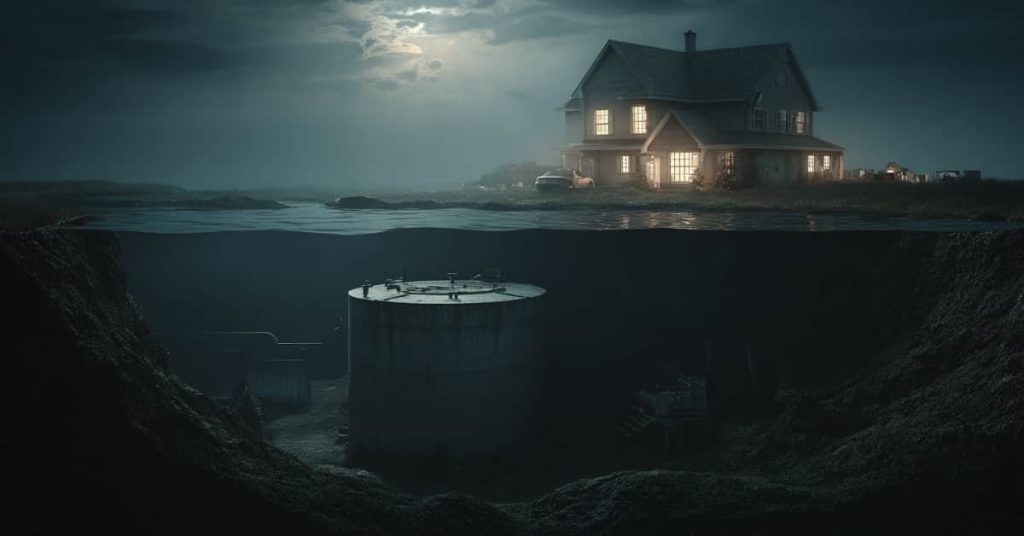
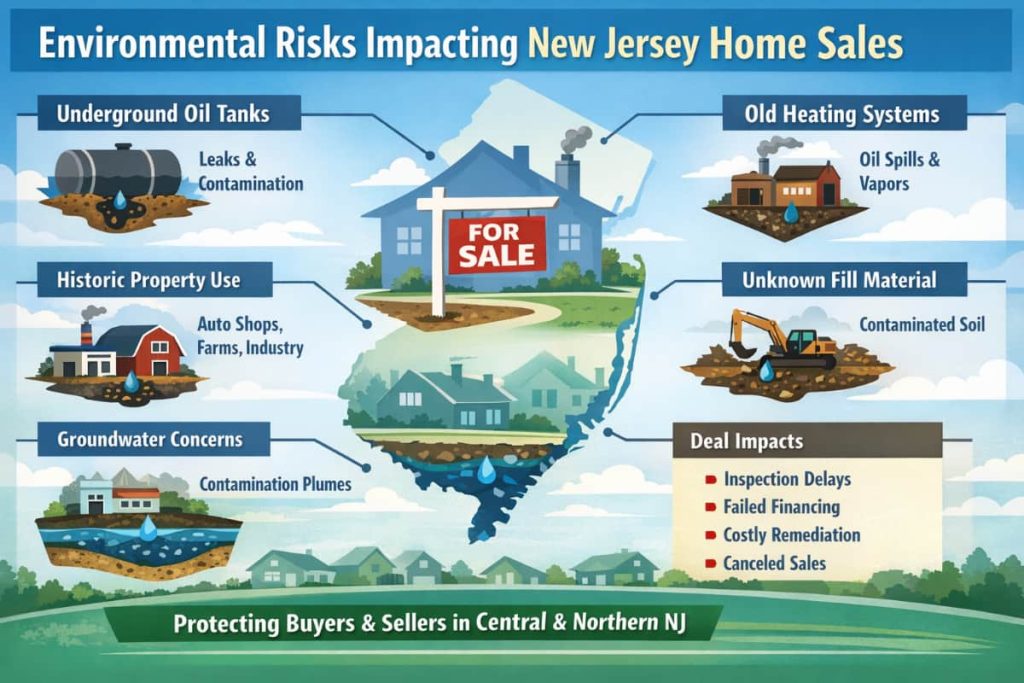
One of the most frequent issues involves historic oil heating systems. Many homes throughout Central and Northern New Jersey relied on underground or above-ground oil tanks for decades. Even when tanks have been removed or abandoned, residual contamination can remain in the surrounding soil or groundwater.
Additional residential environmental concerns include unknown fill material used during construction, contamination migrating from neighboring properties, former agricultural or light industrial land use, and shallow groundwater tables that allow contaminants to spread more easily.
These conditions often go unnoticed until a real estate transaction brings them to light.
When Environmental Due Diligence Is Triggered During Home Sales
Residential environmental evaluations are rarely planned years. They are typically triggered during specific moments in the buying or selling process.
Home inspections frequently raise red flags when oil fill pipes, vent pipes, or staining are observed. Tank sweeps may uncover buried tanks the current owner was unaware of. Lenders may request additional testing if a property history suggests potential contamination. Buyers may also request environmental testing as part of their inspection contingency, particularly when purchasing older homes.
Renovations, additions, or demolition plans tied to a sale can also uncover environmental concerns that require evaluation before work can proceed.
How Environmental Findings Impact Residential Closings
Environmental issues can significantly affect residential real estate transactions, even when contamination is limited in scope. Discovery of environmental concerns often leads to delays while testing, reporting, and regulatory coordination take place.
In some cases, buyers and sellers negotiate credits, repairs, or escrow agreements to address findings. In others, financing may be delayed or denied until environmental conditions are resolved. Transactions may fall apart entirely if risks are not clearly understood or managed early.
Environmental due diligence provides clarity during these moments, allowing informed decisions rather than reactive ones.
Understanding NJDEP Oversight in Residential Transactions
New Jersey has one of the most comprehensive environmental regulatory frameworks in the country. The New Jersey Department of Environmental Protection oversees soil and groundwater contamination, even on residential properties.
Homeowners are often surprised to learn that environmental responsibility does not disappear when ownership changes. If contamination is identified, reporting obligations may apply regardless of whether the release occurred decades ago.
Environmental professionals play a key role in guiding homeowners and buyers through NJDEP requirements, ensuring that evaluations and corrective actions align with state regulations while minimizing disruption to the transaction.
The Role of Soil and Groundwater Testing in Home Sales
Soil and groundwater testing provides critical insight into subsurface conditions that cannot be assessed visually. Sampling helps determine whether contamination exists, how far it may have migrated, and whether regulatory action is required.
In residential settings, testing is often targeted and efficient, focusing on specific areas of concern rather than broad site investigations. This approach allows transactions to move forward with confidence while addressing legitimate risks appropriately.
Testing results also help distinguish between conditions that require remediation and those that pose no actionable concern.
Why “No Visible Problem” Is Not Always Reassuring
One of the most common misconceptions in residential real estate is that environmental issues would be evident if they existed. In reality, many environmental concerns occur entirely below ground.
Contaminants can migrate through soil and groundwater without visible signs on the surface. A property may appear clean while being affected by historical releases from decades prior or from neighboring parcels.
Environmental due diligence acknowledges this reality and provides data-driven answers rather than assumptions.
Environmental Due Diligence for Buyers, Sellers, and Realtors
Each party in a residential transaction benefits differently from environmental due diligence.
Buyers gain confidence that they are not inheriting hidden liabilities. Sellers reduce the risk of last-minute surprises that delay or derail closings. Realtors protect transactions by addressing potential issues proactively rather than reacting under pressure.
Clear communication and early evaluation help ensure smoother transactions and fewer disputes.
Regional Considerations in Central and Northern New Jersey

Environmental conditions vary across New Jersey based on geography, development history, and groundwater characteristics. Homes in Central and Northern New Jersey often face unique challenges tied to dense development, older infrastructure, and historic land use patterns.
Counties such as Morris, Essex, Bergen, Passaic, Somerset, Union, Middlesex, and Hunterdon include neighborhoods where older heating systems, shallow groundwater, and redevelopment history intersect. Environmental due diligence tailored to local conditions ensures evaluations are relevant and efficient.
How Professional Environmental Services Support Home Sales Transactions
Independent environmental professionals provide objective assessments that support informed decision-making. Their role is not to create obstacles, but to identify facts, interpret results, and guide next steps.
Services may include targeted soil and groundwater testing, abandoned tank evaluations, monitoring well installation when necessary, and coordination with regulatory agencies. This expertise allows homeowners and buyers to navigate complex situations with clarity and confidence.
Protecting Long-Term Property Value Through Due Diligence
Environmental issues do not always prevent a home sale, but unmanaged risks can follow a property for years. Addressing concerns during a transaction protects long-term value and marketability.
Homes with documented environmental evaluations and resolutions often stand out positively during future sales. Proactive due diligence demonstrates transparency and responsibility, qualities that resonate with today’s informed buyers.
Professional Guidance for NJ Residential Environmental Due Diligence
Work With Experts Who Understand New Jersey Residential Home Sales Properties
All American Environmental provides experienced environmental services for residential home sales properties throughout Central and Northern New Jersey. From targeted testing to regulatory guidance, our team supports homeowners, buyers, realtors, and attorneys with clear, reliable information when it matters most.
Whether you are preparing to sell, purchasing an older home, or responding to inspection findings, professional environmental due diligence helps protect your investment and keep transactions moving forward.
Contact All American Environmental today to discuss home sales, environmental due diligence services, and gain confidence in your next New Jersey home transaction.